
Students in second, third, and fifth grades explore science through hands-on investigations, engineering challenges, and real-world problem solving.
At McKissick Academy of Science & Technology (MAST), we believe students learn best when they have opportunities to ask questions, explore ideas, and solve real-world problems.
Recently, our second, third, and fifth-grade Sharks participated in our first Biomedical Science Kickoff! This experience marked an important first step toward ensuring every student receives meaningful exposure to biomedical science, one of the three pillars of our STEM magnet school.
Our goal was simple. Give students opportunities to experience what biomedical science looks like through hands-on learning, scientific investigations, and creative problem solving.
Bringing Biomedical Science to Life
Using the book No Two Alike by Keith Baker as a literacy connection, students explored how living things share similarities while also having unique characteristics. Each grade level approached this idea through a different scientific challenge.
Fifth Grade: Becoming Biomedical Engineers
Our fifth graders took on the Bionic Hand Challenge! Working in teams, students explored how the human hand moves and how engineers design tools to support people with physical needs.
Students were challenged to design and build a model hand using simple materials, including cardstock, straws, and string. Their goal was to create a hand capable of opening, closing, and grasping objects.
Through this experience, students explored biomedical engineering, tested their designs, and learned how science and engineering work together to solve human problems.
Third Grade: Investigating Patterns in Nature
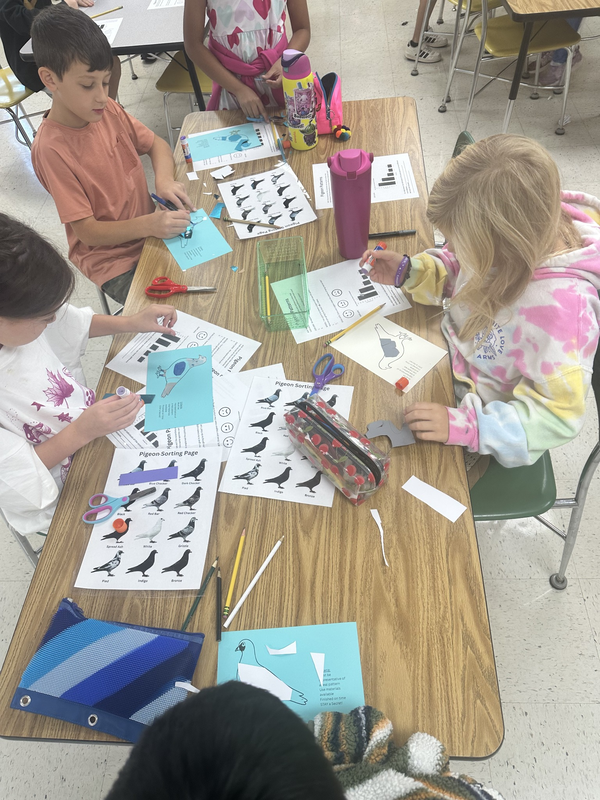
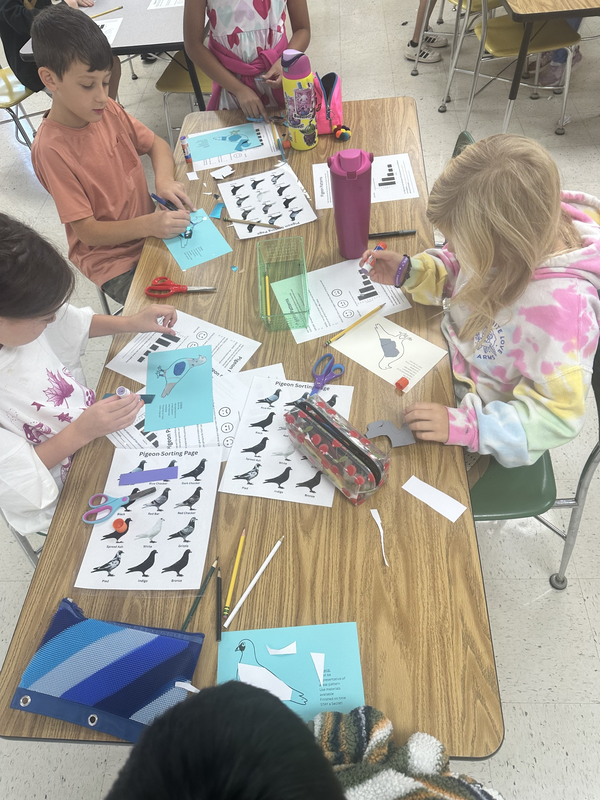
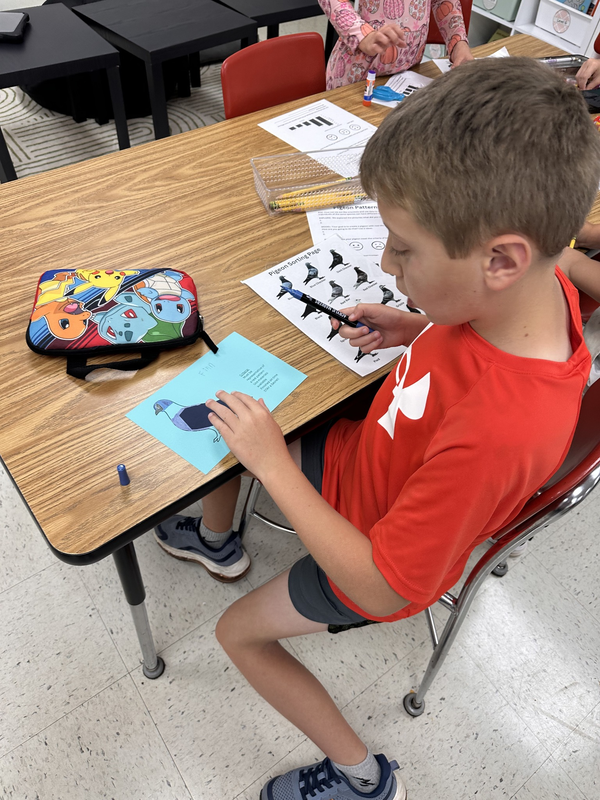
Our third graders became data scientists through an investigation called Pigeon Patterns.
Students explored how members of the same species share common traits while also showing differences in appearance.
By observing pigeons, comparing physical characteristics, and analyzing patterns, students practiced gathering evidence and explaining their findings.
Students also designed pigeon models to demonstrate their understanding of how traits vary within a species.
Second Grade: Exploring Animal Adaptations
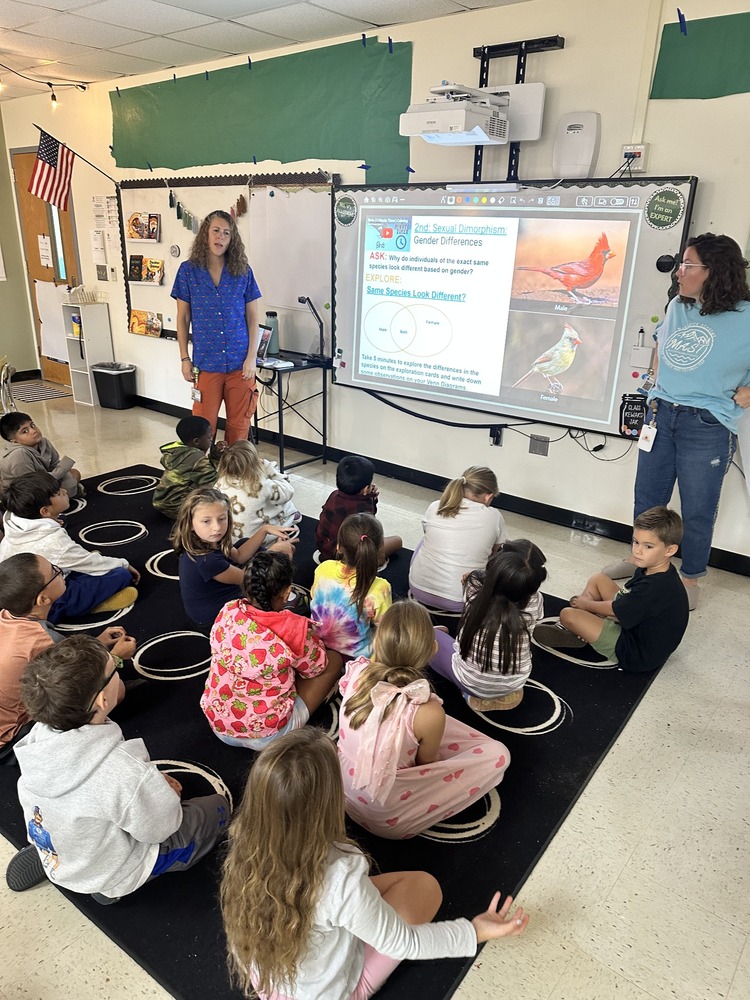
Our second graders investigated why male and female birds of the same species sometimes look different.
Students examined differences in color, size, and physical structures while exploring how these traits help animals survive.
Working with partners, students researched birds and created matching cards to show how different physical characteristics serve important purposes.
This experience helped students connect scientific observations with the relationship between structure and function in living organisms.
More Than a Science Lesson
These experiences represent an important step in strengthening our STEM magnet identity.
At MAST, biomedical science focuses on understanding living things, improving health, preventing disease, and exploring solutions to real-world challenges.
Our goal is to help students see themselves as scientists, engineers, researchers, and problem solvers.
This kickoff was our first effort to introduce biomedical science experiences across multiple grade levels. As we continue developing our STEM programming, we look forward to creating more opportunities for students to explore biomedical science through meaningful, hands-on learning.
Building the Future of STEM at MAST
We recognize that developing a strong STEM magnet program takes time, planning, and a commitment to continuous improvement.
This kickoff was an important first step in our journey toward providing students with consistent exposure to the three pillars of our school.
We are proud of our teachers for embracing these new learning experiences and proud of our Sharks for their curiosity, creativity, and willingness to take on new challenges.
At MAST, we are intentionally pursuing excellence by preparing students to think critically, solve problems, and explore the possibilities of their future.
The best school. The best teachers. The best students. Go Sharks! 🦈💙